Bringing back Concept Mapping to develop vocabulary and meaning
Alex Sinclair, Associate Professor; Primary Science Course Lead; Co-Chair of ASE (23/24), St Mary's University & Emily Montenero, Senior Lecturer in Primary Science, St Mary's University Twickenham
During this session we presented the findings from a small-scale research project into the use of concept maps. As defined by Novak & Gowin (1984, p.29) ‘Concept Maps are intended to represent meaningful relationships between concepts in the form of propositions.’ The researchers explained that this activity was historically predominantly used in secondary schools and has recently fallen out of favour. The most recent and robust piece of research into the use of concept maps in primary science was by Sizmur and Osborne in 1997.
The researchers were interested in exploring how concept maps can be used in the primary science classroom to support the development of vocabulary and oracy. This is a contemporary issue recommended by recent research publications, such as the EEF’s Improving primary science (Luxton and Pritchard, 2023), and Finding the optimum (Ofsted / DfE, 2023), We need to talk: the report of the Commission on the future of oracy education in England (Oracy Education Commission, 2024) and the Review of scientific literacy and oracy in primary school education (Earle, Parfitt & Read, 2025).
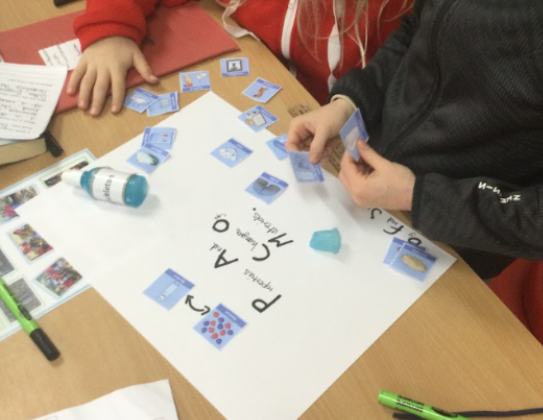
For the research process CPD was delivered to teachers across 2 schools. The teachers were introduced to the activity and made their own concept maps. The teachers then ran the activity with children. Finally, the teachers reflected on the activity through questionnaires and interviews.
The findings were that concept mapping encouraged engagement, especially amongst children with lower ability in English. The teachers reported that discussion and oracy was promoted during the activity. Another theme was the opportunity for retrieval. Children were able to show their understanding of science vocabulary thorough the connections that they made. The teachers reported that the activity promoted inclusion and was beneficial for adaptive teaching. Finally, the maps were used for formative assessment purposes.
In conclusion, the teachers found the activity beneficial for learning and assessment and all reported that they would do the activity again. There were some recommendations, such as using fewer words, giving the children the opportunity to practice the skill by repeating it for future topics and allowing children time to revise their maps.
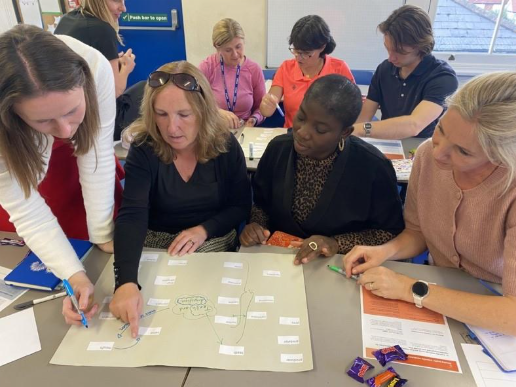
The session concluded with participants making their own concept maps with a selection of words to better understand the process.