Secondary science assessment: Moving beyond data generation to impactful action
Nicola Allen Managing Director, Educake & Tracy Baxter Independent Science Education Consultant, Tracey Baxter Consultancy Services
This session explored how we can move beyond data collection towards meaningful action that improves student learning. We traced the important shift from traditional high-stakes summative assessment to more responsive formative assessment strategies that prioritise continuous checking for understanding.
We discussed the distinction between generating assessment data and actually using it effectively; a gap that we recognise often emerges due to the many competing demands in our classrooms and beyond. We explored how to analyse assessment outcomes more deeply, moving beyond surface-level marks to examine transferable skills such as extended writing, practical inquiry abilities, and mathematical competencies. This skill-focused approach helps teachers to identify meaningful patterns and gaps that inform targeted interventions.
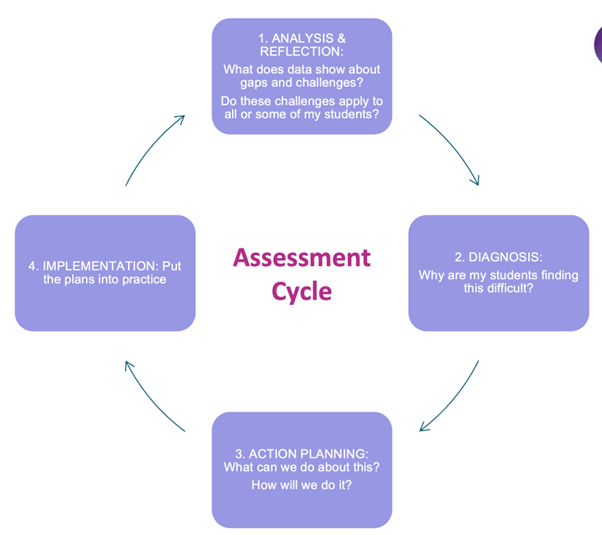
The concept of "closing the loop" for maximum impact was explored; a four-stage process involving:
1. data generation and analysis of gaps
2. diagnosis of the reasons for underlying difficulties
3. action planning
4. implementation of responsive teaching strategies.
This framework ensures that assessment insights translate into concrete classroom action rather than remaining unused in spreadsheets.
Throughout the session, we shared practical ideas and considered how we can manage teacher workload. Delegates discussed how digital testing platforms, such as Educake, can handle routine question delivery and initial data analysis and even diagnosis, for example by the well-designed distractor answers identifying common misconceptions. This frees us up to focus on higher-value tasks of planning the most appropriate actions and interventions.
We explored how approaches such as live marking and verbal feedback techniques can reduce teacher workload while maintaining assessment quality. We also highlighted how many of the formative assessment approaches can also be used to develop confidence and support engagement of students.
As educators, we spend a lot of time generating data, in many forms. The trick is to make the most of any data that we gather, for the benefit of both teachers and students.