Working with glass
Tracy Sherwood-Farnfield, Senior Science Technician, The School of Science and Technology (prep room)
Glasswork is becoming a dying art as experienced technicians often don’t have overlap with newer colleagues to be able to pass this useful prep room skill down to the next generation of technicians.
Being able to custom make delivery tubes, repair broken glass rods and chipped glassware and make all manner of other things besides is a great asset in a technician’s arsenal.
This session looked at why glass behaves the way it does and how we can exploit that during glass working to make stronger bends and smoother edges. After a quick, but essential ‘Health and Safety’ briefing, we took the fear out of cutting glass tubing by sharing the best technique (small score on one side only, application of a wet finger and pull rather than push your tubing) then practised putting some bends into tubing; firstly simple right-angles, but then more severe bends, (useful for custom delivery tubing and glass spreaders for microbiology). We learnt how to work to keep the bends all in the same plane when putting more than one bend in the same piece of tubing and how not to pinch closed the internal void of capillary tubing.
Delegates were given time to practice with scarp tubing to gain confidence in cutting and handling the tubing and we explored other uses of glass working, including flame polishing beakers and test tubes to remove their rough, chipped edges and allow them to be safely put back into service.
We finished up with a look at inserting and removing glass tubing safely using cork borers.
Risk Assessments: Why and How
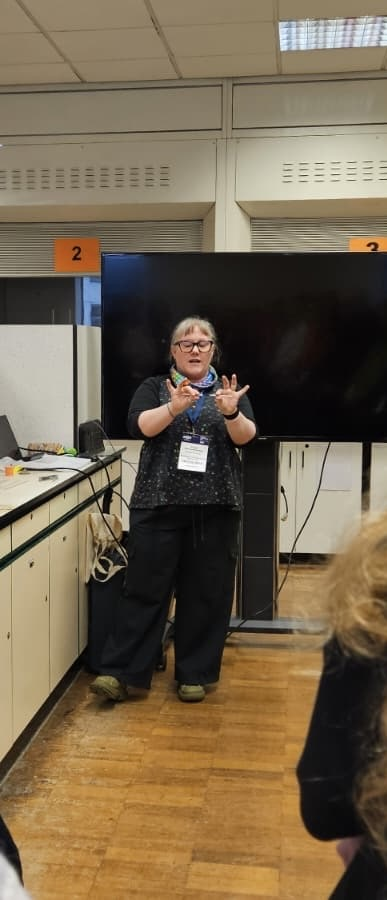
This session was aimed at ECTs with a view to help them confidently tackle writing risk assessments for their practical lessons without feeling burdened by another ‘tick box’ exercise.
We started by looking at the legal standpoint regarding risk assessment and the role of the employer, teacher and technicians in developing good, usable risk assessments, and which organisations (such as CLEAPSS) exist to help us find the information we need. We looked at why risk assessments are needed at all and the hazards that we commonly come across in laboratory practical work, including the students themselves, and other adults.
An in-depth look at CLEAPSS hazcards and their equivalent student safety sheets, revealed how they can be used effectively by different groups and individuals in writing good risk assessments. The risk assessment cycle of identify, evaluate implement, record and review was explored as a means for carrying out our risk assessments and keeping them current.
We evaluated different ways of recording risk assessments that were clear, quick and did not add significantly to the burden of paperwork that new teachers are already expected to produce, the aim being to produce a risk assessment in a timely manner that adequately evidenced the thought process established in the risk assessment cycle.
We then looked at some practical scenarios and produced some risk assessments for them using the skills we had gained through the workshop.
Delegates hopefully left with a clearer understanding of what a risk assessment is, why we need them and what one actually looks like in practice as well as a bank of resources to refer to help with writing risk assessments in the future.