
ASE Evaluated for EngineeringUK | Tackling Climate Change
Introduction
 EngineeringUK has developed a set of resources designed to be delivered by Climate Ambassadors and STEM Ambassadors to promote engagement and understanding of possible solutions to tackling climate change. The session is delivered through a mix of presentations, quizzes and interactive discussion over 45–50 minutes and is designed for 11–14-year-olds.
The resources include a branded, professionally designed presentation, with presenter notes, and accompanying resources for students. The resources have been evaluated by the Royal Meteorological Society as verified climate education resources, assuring the accuracy of the climate science.
The Association for Science Education has provided feedback and evaluated the student activities, guides and slide decks.
Student activities: Presentation and Quiz
The presentation is well balanced and informative, with engaging activities that develop students' learning. The slide deck and presenter notes give the Climate or STEM ambassador clear directions to help them deliver a high-quality session and ensure consistency between presenters. The slide deck is editable, and the presenter notes indicate which sections need personalisation. Notes on each slide highlight the key messages, provide further information to support questions, and offer suggested timings.
Learning objectives and the evidence underpinning them are clearly stated, and the presentation and activities are designed to meet them in an engaging manner. Guidance for group work is clear and assigning roles such as ‘writer’ and ‘spokesperson’ can be an effective inclusive strategy.
The session considers how to engage students and ensure the content is relevant and inclusive. The slide deck allows room for presenter personalisation, helping students to see a realistic career pathway. Presenter notes advise against overemphasising academic qualifications, instead encouraging a focus on skills and attributes that a wider range of students can relate to.
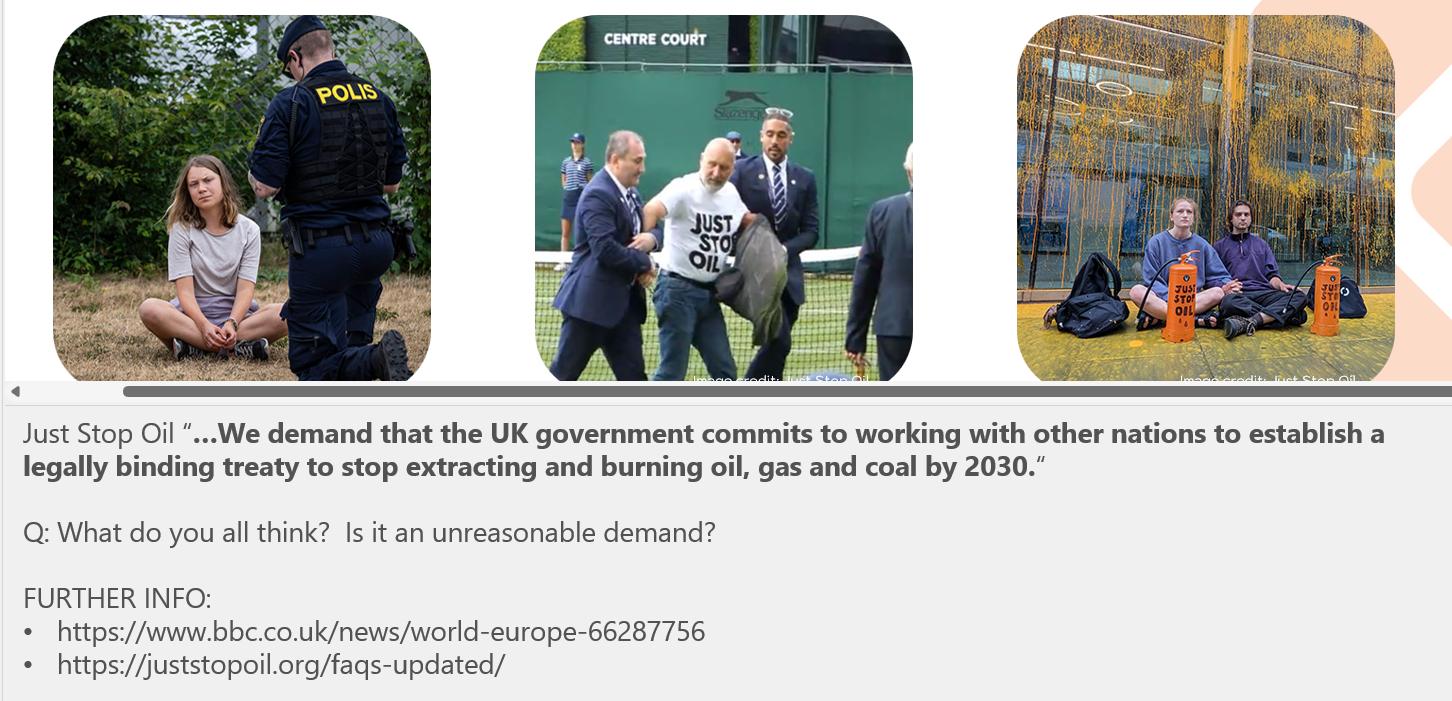
The resource is up to date and relevant, featuring events students may recognise from the news, such as high-profile protests. News links provide presenters with additional background. Showing protests outside the UK emphasises global importance. Rather than focusing on protest actions, the notes encourage presenters to explore the message and prompt students to consider whether the demands are unreasonable. Although a leading question, it transitions well into the main activity.
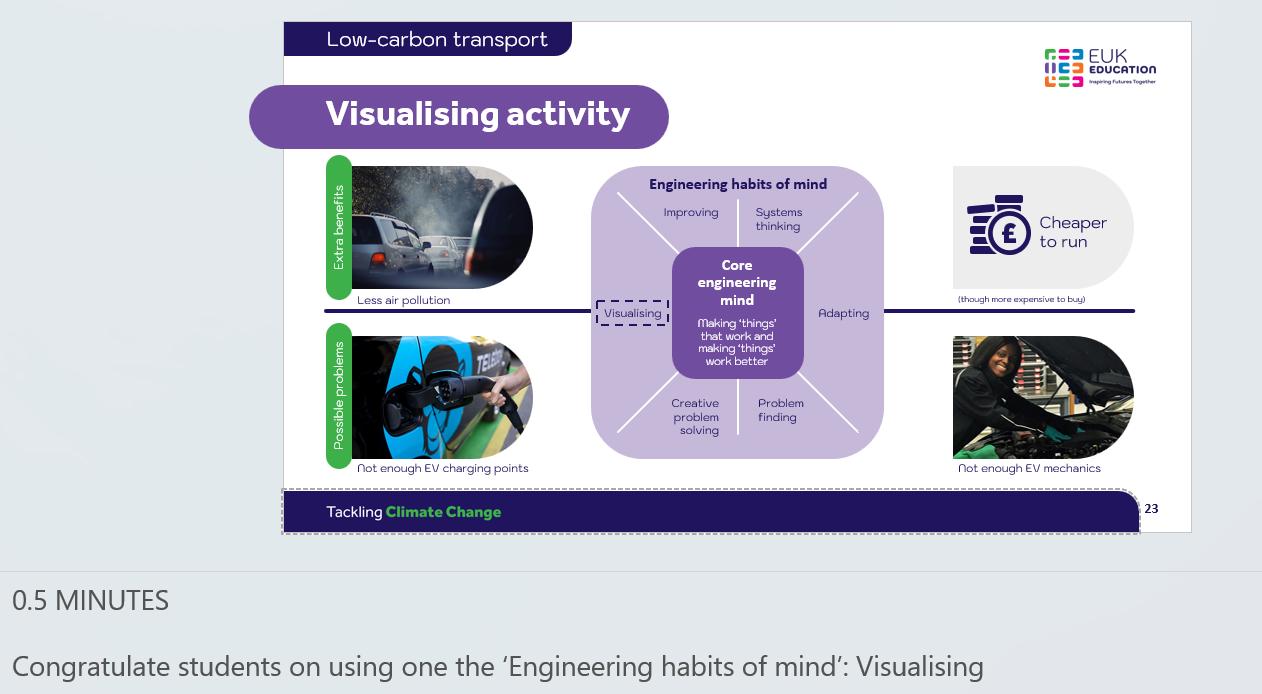
The activity focuses on skills and the ‘Engineering Habits of Mind’, which is a strong approach for making engineering accessible and countering the misconception that it is only for high achievers. The visualising activity effectively shows that students already use engineering-style thinking. More time could be allocated to broaden the range of skills demonstrated, supporting students who may find visualising challenging. The inclusive approach continues when exploring engineering pathways, showcasing apprenticeships, T Levels, A Levels and university routes. Presenters may benefit from additional information to give a balanced explanation of these pathways.
Graphs are used to present and compare data. This is an excellent way to convey the messages, but also to develop students’ graph interpretation skills. A mix of bar, line and hybrid graphs are used to convey the positive messages about engineering salaries and UK emissions.
These styles of graphs are complex and will challenge students that may not have encountered similar graphs before. Some care has been taken to add additional keys, labelling of axes and include contrasting colours to ensure it is accessible to students with Colour Vision Deficiency. There is a lot of information in the graphs and the suggested timing might not be sufficient for all students to understand and access the information.
A discussion activity on the impacts of climate change in the UK allows students to share knowledge, develop oracy skills and connect climate change to their own experiences. Focusing on the UK localises learning and increases engagement. The climate science recap is appropriate, though somewhat simplistic for this age group and could be pitched more closely to curriculum standards.
The activity balances the seriousness of climate change with a positive message that solutions exist and are already being implemented. This approach reduces feelings of helplessness and reinforces the idea that students can be part of the solution through future careers.
Student Quiz and Activity sheet
The activity includes 2 paper based quizzes designed to:
1) Assess students prior learning
2) Teach students key aspects of climate science
3) Uncover and challenge misconceptions
4) Measure students’ progress during the session.
The tasks should make students think, use graph interpretation skills and draw on prior learning.
The quizzes are also downloadable and available at the end of the slide deck The competitive element may engage some students but must be managed carefully to ensure accessibility and avoid guesswork. Rewarding speed may disadvantage some neurodivergent learners.
While students of this age should have been taught what fossil fuels are, they may be less familiar with derivatives of oil. Highlighting that aviation fuel and petrol/diesel are forms of oil would be useful for presenters to emphasis.
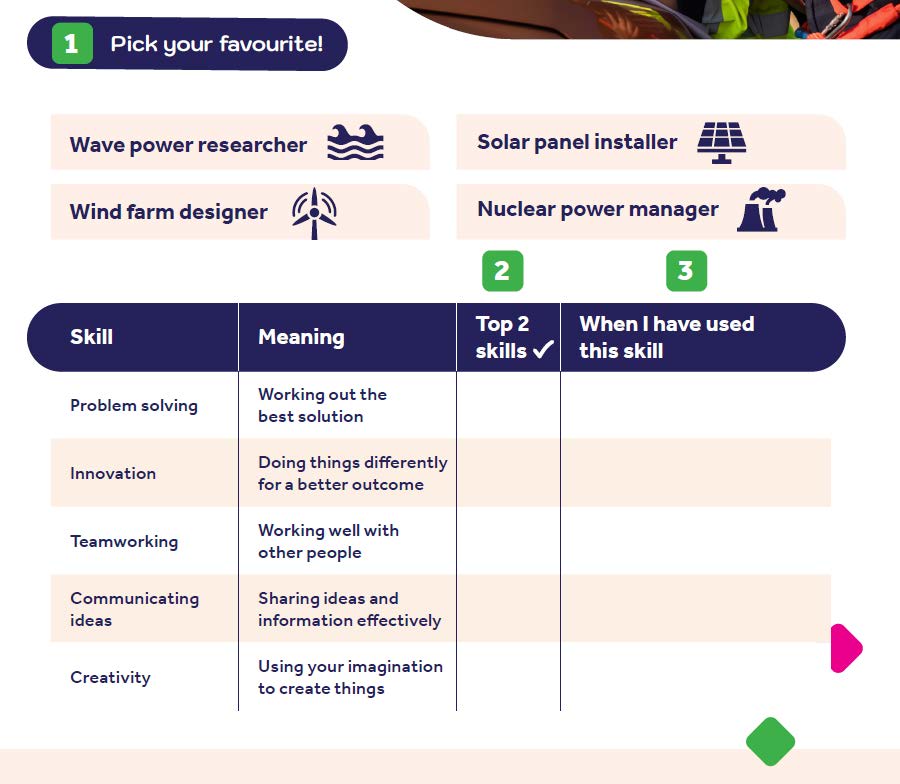
The ‘sustainable jobs’ student worksheet focuses on skills, broadening students’ perspective of what is needed for a job in STEM. Asking students to identify where they have used these skills helps them see these careers as attainable. Images show diverse people and workplaces, helping challenge stereotypes. Presenters may benefit from additional background on these jobs to support discussion and manage questions.
Presenter Guide
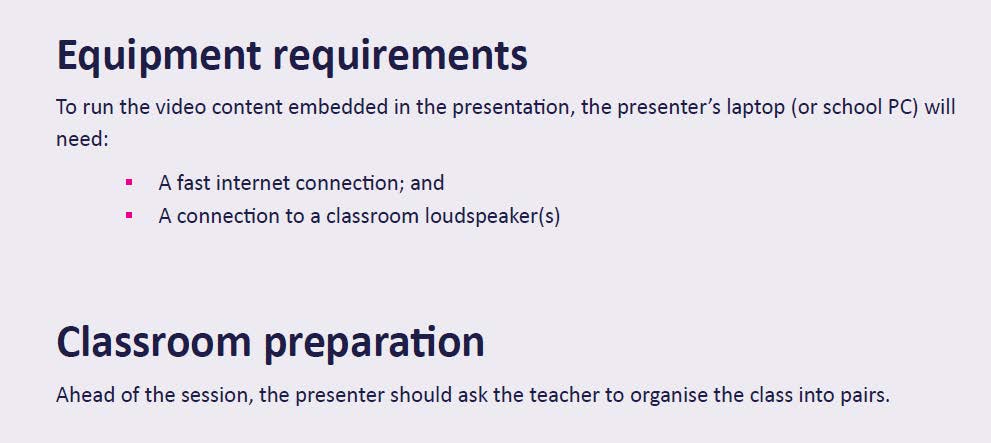
This 14-page PDF supports presenters in delivering the activities. It states three clear objectives and the key messages to communicate. The guide details what the ambassador needs to do in preparation in advance of the session, including:
communication to the school; questions for the teacher; printing and tech to set up (along with alternatives if the tech is unavailable).
This is a comprehensive supporting material that also gives background to the rationale behind the resource, the key learning objectives, evidence for the resources and notes on the sessions’ pedagogy. It is user-friendly, accessible and well structured, helping ensure presenters deliver a high-quality session and support consistency between presenters.
Tackling Climate Change – Summary
The resource includes a professionally designed, editable presentation with detailed presenter notes, student activities, quizzes, and a 14-page presenter guide. It covers climate science, impacts in the UK, engineering solutions, graph interpretation, careers in sustainability, and skills development.
The content is suitable for KS3 students, with accessible explanations, interactive and engaging tasks, and relatable examples. Some scientific explanations could be pitched slightly higher for this age group, but overall the tone, activities, and pacing are well matched.
The resources are verified by the Royal Meteorological Society, ensuring the climate science is accurate and up to date. Pedagogy is strong: objectives are clearly stated, activities are purposeful, misconceptions are addressed, and the session balances knowledge with skills. Graph interpretation tasks develop curriculum-aligned skills. The pedagogy has been carefully considered to give a balanced session, including questioning strategies, oracy development, and inclusive role assignment.
Presenter notes are comprehensive and supportive; the presentation is editable; quizzes have flexible delivery options; and the Presenter Guide offers step-by-step preparation and delivery advice. Some additional notes on career routes and STEM roles could further help presenters.
Concluding Remarks
The resource addresses the need for high-quality, reliable climate education and for widening young people’s perceptions of engineering careers. It supports ambassadors in delivering consistent, engaging sessions without requiring specialist subject expertise. This resource is unique in focusing on the solutions to climate change, presenting a more positive picture where learners see solutions in place that they can be part of.
Resources Reviewed January 2026
About ASE Evaluated
ASE Evaluated’ is a recognised mark of quality assurance that indicates science education resources have been reviewed and evaluated by ASE. ASE can evaluate any type of resource including teaching guidance, lesson plans, practical activities, books and equipment.
Resources are evaluated to ensure they meet good standards for:
• Engagement and accessibility
• Evidence-informed and scientifically accurate content
• Alignment with national curricula
• Connection to clear and relevant pedagogy
• Innovation or added value
• Compliance with health and safety regulations
