
A tribute to Wynne Harlen OBE
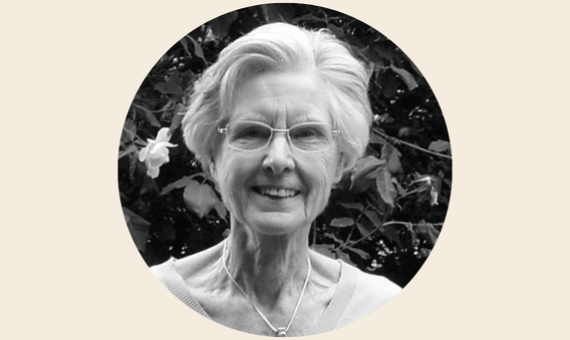
Marianne Cutler, Director Policy and Curriculum Innovation ASE
I clearly remember my first encounter with Wynne, an internationally recognised tour de force in primary science education and assessment, when many years ago and recently out of the classroom, I sat in on an ASE committee that Wynne was chairing. Immediately welcoming, generously supportive and encouraging, as Wynne was to so many others in our community, Wynne became my first port of call on all primary science matters from preparing responses to government consultations to actively engaging on ASE primary science projects.
With the evidence base firmly at her fingertips, attention to detail and persuasive clarity with the written word, Wynne also had a talent for engaging and developing primary science teachers at all stages of their career. I recall our project team for ASE’s Key moments in history and science: a fossil hunter’s story, working with a group of teachers from about ten primary schools, spanning senior leaders to early career teachers. As pre-pilot work over several days, the rest of our small team, including me, found it tricky to meaningfully engage the group but on the last day, it was Wynne’s turn, aged 82 years. Immediately drawing the teachers in, this was a masterclass in dialogic teaching, assessing the effectiveness of pedagogic approaches towards intended learning outcomes. As a result, we reshaped the project significantly and it went on to be highly popular and successful.
I count myself as very lucky to have worked with Wynne over many years - always such a pleasure and personal learning experience. Likewise, ASE and our wide community of primary science educators, and beyond, continue to benefit from Wynne’s legacy which influences curriculum, pedagogy and assessment policy and practice.
Michael J Reiss, Professor of Science Education, UCL Institute of Education
With the death of Professor Wynne Harlen OBE just before Christmas 2025, the world of science education has lost one of its greats. I had long known of her work, but I think I first met her when she presented to one of the closed seminars that led to the publication of the influential Beyond 2000 (Millar & Osborne, 1998) report. What stood out, in addition to her exceptional grasp of what really mattered about science education, was her boundless energy and enthusiasm.
These qualities never seemed to leave her. She was also a very generous person. When she won the prestigious international puRkwa prize in 2008, it was typical of her that she used the money that came with the award to host a very enjoyable residential seminar for ten science educators. This led to the first of the Big Ideas in Science Education reports (Harlen, 2010). Wynne’s work on Big Ideas has been exceptionally influential both in the UK and internationally. When I look it up, I see that the 2010 report has over 700 citations. More importantly, it and its sister publication (Harlen, 2015) have helped transform the science education curriculum in a number of countries.
Wynne was a great supporter of ASE and I believe that back in 1986 she and Sue Dale Tunnicliffe persuaded Head Office to start Primary Science Review as the sister journal to School Science Review. She also edited ASE Guide to Primary Science Education (Harlen, 2006) and was often to be seen at ASE events. In due course she became the organisation’s President, a role she fulfilled with her characteristic drive.
Someone with her record might have been excused for sometimes showing a degree of self-satisfaction. But this wasn’t Wynne at all. She also had that welcome trait of treating everyone irrespective of who they were – and she was as happy to show one pictures of her cats or Juliet’s alpacas as to discuss primary science, assessment, the curriculum or any other aspect of science education. She is hugely missed by so many.
References
Harlen, W. (Ed.) (2006) ASE Guide to Primary Science Education, Association for Science Education, Hatfield.
Harlen, W. et al. (2010) Principles and Big Ideas of Science Education, Duns. Available at https://www.ase.org.uk/bigideas. Also published in Chinese, Farsi, French, Greek, Serbian, Spanish and Welsh.
Harlen, W. et al. (2015) Working with Big Ideas of Science Education, InterAcademy Partnership, Trieste. Available at https://www.ase.org.uk/bigideas. Also published in Chinese, French, Italian, Serbian, Spanish and Welsh.
Millar, R. & Osborne, J. (Eds) (1998) Beyond 2000: Science Education for the future, Nuffield Foundation & King’s College London, London.
Professor Derek Bell (Chair of ASE 2000-2001; Chief Executive of ASE 2001-2010)
Professor Wynne Harlen OBE (1937-2025): a personal reflection
In October 1985 a young(ish) lecturer in science education knocked on the door of the recently appointed Professor in Science Education at the University of Liverpool, Wynne Harlen. After an hour of gentle but rigorous discussion, she agreed to act as supervisor of a research thesis he was about to commence exploring the role of science co-ordinators in primary schools. That meeting was the beginning of an amazing journey of 40 years in which I came to know Wynne as my supervisor, “boss”, colleague, mentor and friend. It is true to say that in many ways, I owe my career to Wynne’s guiding wisdom, challenge and encouragement; for which I am truly grateful.
Like so many others who have benefitted in the same way, I have been lucky to know and work with Wynne, personally. The truly amazing thing, however, is that there are many thousands of teachers, researchers, students and children who, through her books, articles and presentations, have benefited from her insights and clarity of expression; be that on assessment, primary science or curriculum development. Wynne’s ability and willingness to make time to engage with such a wide range of people, from pupils to the highest levels of government, was without doubt one of her many strengths.
Wynne’s commitment to improving and contributing to the place of primary science, was nowhere better demonstrated than in her support for ASE, serving on committees, editing Primary Science Review, giving presentations at both the Annual Conference and a myriad of regional events. I felt very privileged to be Chair in 2001, when, as part of our Centenary Annual Conference, the Association presented Wynne with a Lifetime Achievement Award for her contribution to science education. Furthermore, it was an honour, as Chief Executive, to invite her to be President of the Association in 2010; an invitation she accepted gladly.
The list of activities to which Wynne contributed and led is too long to include here but, from a personal perspective, I can’t think of her without recalling the SPACE Project which underpinned the Nuffield Primary Science curriculum materials. As recently as 2022-24, the ASE’s own Mary Anning Project challenged some of the ways in which we think about science. However, the two ‘Big Ideas in Science’ publications stand out. These were the result of two seminars held on the shores of Loch Lomond in 2008 and 2013 and attended by a truly international group of experienced science educators with whom Wynne had worked over her extensive career. The reports, which were widely circulated, with the help of ASE, in the UK and across the globe, have led to extensive debates about how we approach science education.
For me the ‘Big Ideas’ project reflected Wynne as the truly amazing person she was: a highly respected, committed, meticulous, hard-working individual willing to listen to alternative perspectives in order to ‘get things right’. Most importantly she was a caring, empathetic, and generous human being; she will truly be missed.
Christine Harrison, King’s College London
Wynne Harlen has been a highly influential figure in educational assessment and science education research, particularly in how assessment can support learning and how science should be taught effectively in schools. She led a team of experts that explored the goals of science education, not in terms of the knowledge of a body of facts and theories, but as a progression towards understanding key ideas – ‘big ideas’ – of relevance to students’ lives during and beyond school. These key ideas focused on conceptual understanding with the development of scientific capabilities and attitudes and this has influenced curricula and teaching at both primary and secondary level in schools in the UK and internationally. She will be a much missed member of our science education community having been such a significant figure for many decades.
Valerie Wood-Robinson
I had several contacts with Wynne at ASE through the years since the 1970's but I got to know her quite well when she and I edited, respectively, the 2006 ASE Guides to Primary and Secondary Science Education. Wynne was very generous in sharing her experience and advice which enabled a fruitful collaboration. Some of the chapters were included in both volumes, with appropriate adaptations by the authors and editors to serve each set of readership. The result was a pair of Guides that illustrated the unity of science education across the phases.
Wynne was very agreeable to work with, clever, understanding and wise. Although so distinguished in the field of science education she was always respectful of the opinions and experience of others however humble, particularly those representing grassroots practice.
Much of Wynne's work helped to raise the status of the primary science curriculum. Her legacy will include much of her philosophy which unobtrusively pervades the best of modern practice.
I was interested to read Wynne's life story in the tribute by her daughter on the memorial page. I assumed that she was still living in Scotland and was surprised to learn that she has spent her last few years living only a few miles from me. Had I known, I may have been able to visit her in her Care Home to enliven the routine there with nostalgic chats about the heyday of science curriculum development!
Stuart Naylor
It must have been 1985, my second ASE Annual Conference. I remember being amazed that it was possible to sit next to Wynne Harlen to eat lunch and have a conversation with her. At that time there was nobody more famous in primary science, so it was a surprise to find that she was immediately ready to have a conversation and that she was so generous with her time and her expertise. That generosity continued throughout the next 40 years.
Wynne’s expertise, reputation and clarity in writing meant that her books were the obvious choice to recommend to student teachers and teachers on CPD courses. From the groundbreaking Taking the Plunge in 1985 to the many editions of The Teaching of Science in Primary Schools (still on sale in bookshops today), there wasn’t anything better. Without exception, teacher educators knew that anybody reading Wynne’s work would make a much better job of teaching primary science than they would have done otherwise.
I was lucky enough to work closely with Wynne on what was probably her last major project, Key moments in history: a fossil hunter’s story, which deals with the life and discoveries of Mary Anning. I’m sure that Wynne’s huge reputation helped us to secure the funding for the project; certainly her research background and her ability to make sense of complex issues got us off to a rapid start. The project has generated incredibly positive responses from children and teachers, some of which Wynne got to see in classroom visits at the time.
When my wife and colleague, Brenda Keogh, died in 2013, Wynne was one of the first to write a tribute to Brenda. I know that I speak for Brenda as well in saying that Wynne’s death is a huge loss to the world of science education. We will miss you Wynne.
Jane Turner
Like many others who were fortunate enough to work with Professor Wynne Harlen, I knew of her long before I ever met her. Her writing on primary science education and assessment – particularly Taking the Plunge and Teaching of Science in Primary Schools – were seminal texts for those of us working in primary science at the beginning of this century. The Big Ideas in Science was especially influential in shaping my own understanding of scientific ideas and, crucially, in helping me see the importance for primary teachers of knowing what really matters in the science they teach and how ideas connect.
As an ASE member, I heard Wynne speak at conferences and read her articles in Primary Science. She loomed large in my professional life, so I still remember the mixture of panic, amazement and honour when my colleague Steve Marshall and I realised that she was sitting in the audience for a workshop we were leading at an ASE conference in 2010, presenting early work on what would become the Primary Science Quality Mark. In typical Wynne style, her feedback was generous, encouraging and deeply insightful.
Wynne went on to play a significant role in shaping PSQM, joining the Advisory Group and helping Steve and me to think carefully about how it should develop and grow. She also continued to influence my own professional development – encouraging me to write for Primary Science and the ASE Guide to Primary Science, and inviting me to join the 2012 working group that led to the report Developing policy, principles and practice in primary school science assessment.
What made working with Wynne such a joy was the way she treated you: as a colleague and a friend. She never used her immense intellect, wisdom or experience to dominate. Instead, she enabled professional growth in everyone she worked with, listening carefully, asking the right questions and drawing ideas together so that you left thinking more clearly and aiming higher. At the heart of all her work was a deep and unwavering commitment to improving science education for children, grounded in her belief in teachers and their capacity to do their work well.
It was an absolute honour to know her. Wynne’s influence on science education is profound, and it will continue to shape policy and practice in primary science for many years to come.